Animation Is Not Just "Cartoons"
When we watch the Colossal Titan kick down a wall in Attack on Titan, or Luffy gear up in One Piece, it feels effortless. But here’s the reality: behind every 24 minutes of an episode lies thousands of drawings, a small army of artists, and enough caffeine to power a small city.
Animation is the art of "controlled movement." It’s the ultimate director's medium because, unlike live-action, you don't just find the shot—you create the atoms of the shot.

🌍 The Origin: From Cave Paintings to Crunchyroll
Before we get to the "how," we have to respect the "who."
🕰️ A Quick History Lesson (No, there won't be a test)
- 1900s: France and the USA started it all with hand-drawn frames on paper. It was slow. It was shaky. But it worked.
- 1928: A certain mouse named Mickey entered the scene and changed the game forever.
- 1917: Japan enters the chat. Namakura Gatana is the first known anime, but it was Osamu Tezuka (the "God of Manga") who truly revolutionized the industry post-WWII.
Why Does Anime Look... Like That?
Anime isn't just "Japanese animation." It's a visual language. Big eyes for emotion, "limited animation" (saving budget on background movements to spend it on epic fight scenes), and a focus on cinematic camera angles that would make Spielberg jealous.
🧠 The Step-by-Step Process: From Script to Screen
1️⃣ Idea & Concept Development
Everything starts with a "What if?" What if a boy wanted to be the King of the Pirates? What if a notebook could kill? This is where the world-building happens. You define the genre, the rules of magic or physics, and the target audience.

2️⃣ Script Writing & Storyboarding
This is the blueprint. A script tells you what they say; a Storyboard tells you where the camera is. In the industry, we call the storyboard the "Movie before the Movie."
If you want to try your hand at digital storyboarding, check out some professional tablets. [Insert Link: Grab the best drawing gear for storyboarding here]
3️⃣ Character Design & "The Sheet"
Before an animator can draw a character, they need a "Model Sheet." This shows the character from the front, side, and back, plus all their wacky facial expressions. If Luffy's hat is two inches too big in one frame, the fans will notice. Trust me.

4️⃣ Key Animation vs. In-Betweens
This is the "heavy lifting" phase:
- Key Animation: The senior artists draw the "poses" (e.g., Punch starts -> Punch hits).
- In-Betweens (Tweening): Junior artists draw the frames between those two points to make it smooth. This is where the "fluidity" happens.
5️⃣ Layout, Backgrounds, and Coloring
While the characters are moving, the Background Artists are painting the world. Modern anime often uses a mix of 2D painting and 3D modeling for cities and landscapes to give that "epic" scale. Then, digital painters add the "Cel-shading" and colors.

6️⃣ Compositing: The Secret Sauce
This is where the magic happens. Compositors take the characters, the backgrounds, and the special effects (explosions, lightning, lens flares) and blend them together.
Rohit’s Pro Tip: High-quality compositing is what makes Demon Slayer look like a billion dollars. It’s all about how the light hits the digital "ink."
7️⃣ Sound Design & Voice Acting (Seiyuu)
In Japan, voice actors (Seiyuu) are rockstars. They record the dialogue, often together in one room, to get that authentic "shouting-your-attack-name" energy. Finally, the "Foley" artists add the sounds of footsteps, clashing swords, and dramatic wind.
🛠️ The Animator’s Toolkit
Want to start your own studio? Here’s what the pros use:
- Toon Boom Harmony: The industry standard for 2D.
- Clip Studio Paint: The king of drawing and manga.
- Blender: It’s FREE and incredible for 3D/2D hybrid stuff.
- DaVinci Resolve: For that final "filmic" color grade. [Insert Link: Check out the best software deals for creators here]
🎬 Final Thoughts
Making an anime isn't just about being a good artist; it’s about being a marathon runner with a paintbrush. It takes patience, a bit of obsession, and a whole lot of heart.
So next time you see a character power up for three episodes straight, remember the thousands of hands that made that glow possible.
No comments yet. Be the first to share your thoughts!
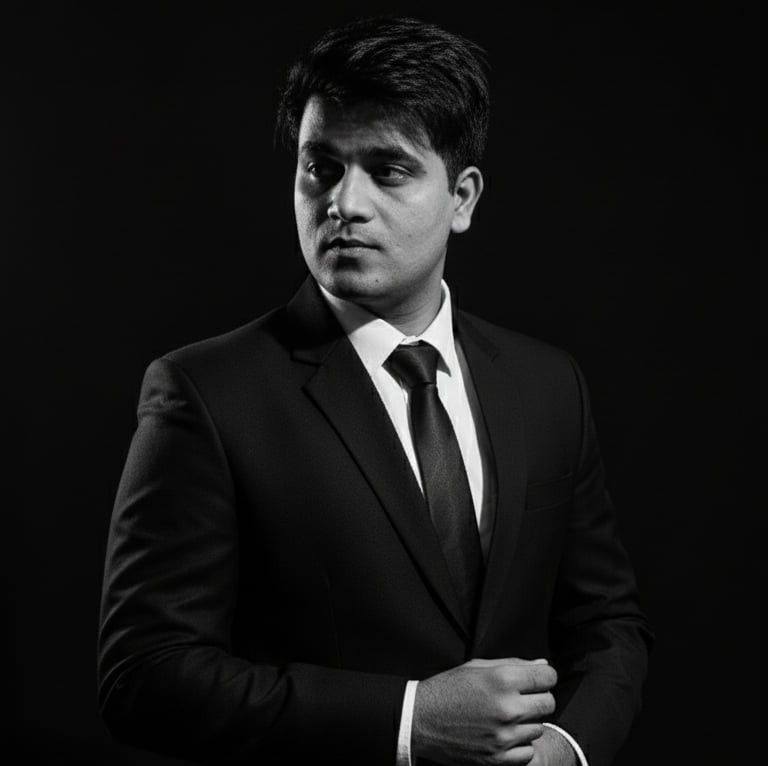
Rohit
Hi! I’m the person behind Roll Sound Action—someone who has been in love with cinema long before I even knew what a "frame" or a "cut" really meant. I didn't go to film school. I wasn't handed a camera and told, "go make magic." I just fell for stories, visuals, and sounds—and slowly started digging into how all of it works. Now, Roll Sound Action is the space where I share what I've learned and what I'm still figuring out. From scripting to VFX, I break it all down like I would for a friend over chai. No fluff, no flex—just real stuff for people who genuinely care about the art of filmmaking. If you're someone who pauses movies just to admire the lighting, or rewatches scenes to study the edit... yeah, we'll get along just fine.