Welcome to the Dark Room
Hey everyone, Rohit here. Let’s cut to the chase: you can have the most expensive cinema camera in the world, the sharpest anamorphic lenses, and A-list actors, but if your lighting is flat, your film will look cheap. Period.
Cinematic lighting isn't just about getting a proper exposure so we can see what's happening; it’s about sculpting the light, isolating your subjects, and giving a scene its heartbeat. If there’s one thing directors like Christopher Nolan understand—besides bending the rules of time—it’s how to manipulate practical, motivated light to ground a wild, high-concept story strictly in reality.
I've spent hours staring at the color wheels in DaVinci Resolve trying to rescue badly lit skin tones. Trust me, it’s always better to get it right in the room. Grab your light meters, because today we are breaking down the exact setups, techniques, and gear you need to create true visual alchemy.
What is Cinematic Lighting, Really?
Cinematic lighting is the intentional manipulation of light and shadow to create dimensionality and atmosphere. Unlike flat TV news broadcasting where everything is blasted with a thousand watts of clinical brightness, cinematic lighting is obsessed with controlling the darkness.
Here is an insider truth that only filmmakers really notice: if your lighting is too soft and perfectly even, it stops feeling cinematic and starts feeling like a mattress commercial. True cinema is about withholding information. Shadows create emotional uncertainty. When you intentionally hide half of a character’s face in darkness, the audience naturally leans in, trying to figure out what they are hiding. You aren't just lighting a room; you are manipulating human psychology.

The Holy Trinity: The 3-Point Lighting Setup
Before we start breaking the rules, we have to know them. The 3-point lighting setup is the bedrock of visual media.
- Key Light: Your main source of illumination. Usually placed 45 degrees to the side and slightly above the subject.
- Fill Light: Placed on the opposite side of the key to "fill" in the deep shadows. You always keep this dimmer than the key to maintain that sweet contrast ratio.
- Backlight (Hair Light): Placed behind the subject to carve them out from the background. It gives that nice halo effect on their shoulders and hair, separating them from the wall behind them.
Once you master this, you can start turning off lights to see what happens.
The Character Portraits: Shaping the Face
How you sculpt your subject's face tells the audience exactly who they are before they even speak a line of dialogue.
Rembrandt Lighting
Named after the legendary painter, this setup leaves a small, inverted triangle of light on the shadowed cheek of your subject. It’s dramatic, moody, and universally flattering. Move your key light further to the side and higher up until the shadow of their nose connects with the shadow of their cheek.

Split Lighting
Place the key light 90 degrees to the side of your subject, splitting their face exactly in half—one side illuminated, one side in pitch black. It’s the ultimate setup for that morally ambiguous character reveal in an Agatha Christie-style whodunit. Is he a brilliant detective like Poirot, or is he the killer? The light says he's a bit of both.
Painting with Story: Motivated & Practical Lights
You never want your lighting to feel "fake" or source-less.
- Practical Lights: The actual light sources visible in the frame—a vintage desk lamp, a flickering neon sign, or a TV screen.
- Motivated Lighting: When your big, off-camera cinema lights are set up to mimic those practicals.
I'll never forget being on a messy indie set a few years back. We were shooting a tense, emotional climax, and right in the middle of a take, the afternoon sun completely vanished behind storm clouds. We panicked. But instead of wrapping for the day, we taped a frosted shower curtain over the window outside and blasted a 300-watt LED through it, matching the exact angle and colour temperature of the real sun. The audience never knew the difference. That’s the power of motivated lighting.
The Missing Ingredient: Atmosphere and Haze
You can set up the most beautiful lights in the world, but if the air is completely clean, the shot will still feel a little hollow.
Cinematographers don't just light the subject; they light the air. By introducing a light haze or fog into the room, your lights suddenly become physical objects. You get those gorgeous, volumetric beams pouring through a window blind. Combine this with a heavy diffusion filter on your lens (which we’ve talked about in our RSA gear guides), and it instantly adds a layer of texture that screams "cinema."

Common Cinematic Lighting Mistakes
Before we talk about gear, let's look at the traps that ruin a shot:
- Blasting the Subject from the Front: Placing your key light right next to your camera lens destroys all facial contours. It makes the subject look 2D. Always offset your light.
- Forgetting the Background: If your subject and your background are lit at the exact same intensity, they merge together. Use a backlight to carve your subject out.
- Accidental Mixed Lighting: If your room lights are warm (tungsten) and the daylight coming through the window is cool (daylight), your camera sensor will panic, resulting in muddy, weird skin tones. Choose one color temperature to dominate the scene.
The Creator Setup: YouTube Videos & Interviews
Not all of us are shooting gritty thrillers every weekend. Sometimes we're building a brand online.
When I shoot gadget reviews for YouTube, I know that flat lighting kills trust. Viewers subconsciously tune out of webcam-quality lighting. You want a flattering, engaging look that pops. Use a large softbox for your key light to wrap the light smoothly around the face. Make sure the light catches your eyes—those little reflections are called "catchlights." Without them, a subject's eyes look dead and glassy; with them, the subject looks alive, present, and trustworthy.

Best Beginner Lights to Get the Look
To execute these setups, you don't need a truck full of ARRI Sky panels. But you do need the right kind of light.
Those cheap $15 RGB wands you see everywhere? They have terrible CRI (Colour Rendering Index) and will make human skin look like bruised fruit. What you actually need is a strong COB (Chip on Board) LED daylight or bi-colour light. A bare COB light is incredibly harsh, which is great for hard shadows, but its real superpower is that you can mount a massive softbox dome onto it to create beautifully soft, wrapping light.
The Amaran 100d or the Godox SL60W paired with a dome are phenomenal entry points. They give you the sheer output power to shape, bounce, and control your scene.
When you get it right on set, post-production becomes a playground. You aren't fixing mistakes; you're just dropping nodes in Resolve to push those perfectly placed shadows a little deeper.
Every great frame begins in darkness. Light reveals character before dialogue ever can. Go out there and shape it.
No comments yet. Be the first to share your thoughts!
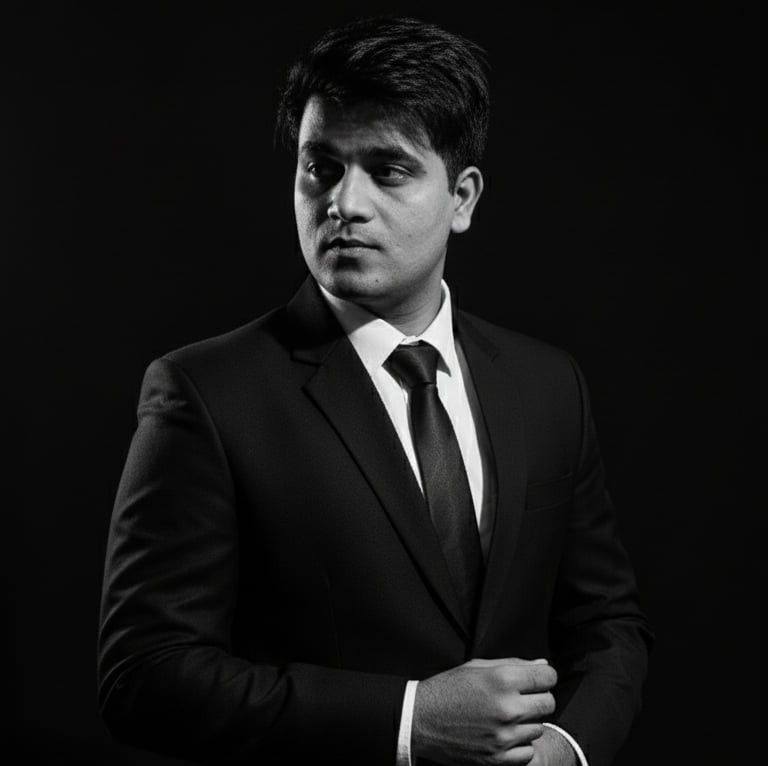
Rohit
Hi! I’m the person behind Roll Sound Action—someone who has been in love with cinema long before I even knew what a "frame" or a "cut" really meant. I didn't go to film school. I wasn't handed a camera and told, "go make magic." I just fell for stories, visuals, and sounds—and slowly started digging into how all of it works. Now, Roll Sound Action is the space where I share what I've learned and what I'm still figuring out. From scripting to VFX, I break it all down like I would for a friend over chai. No fluff, no flex—just real stuff for people who genuinely care about the art of filmmaking. If you're someone who pauses movies just to admire the lighting, or rewatches scenes to study the edit... yeah, we'll get along just fine.